
- Buy Crypto
- Markets
 Futures
- Spot
- Copy Trade
- Earn
- More
$5 Million Stolen Funds Blocked, Privacy Mixer Railgun Turns Into DeFi Protocol "Clawback Tool"?

Hacker's Loot, Can Actually Be Forced to Return?
On February 12, the zkLend lending protocol on Starknet was hacked, losing nearly $5 million. However, the hacker did not expect that after mixing the money into Railgun, the final step before whitewashing could be immediately blocked by Railgun's protocol policy, forcing a return.
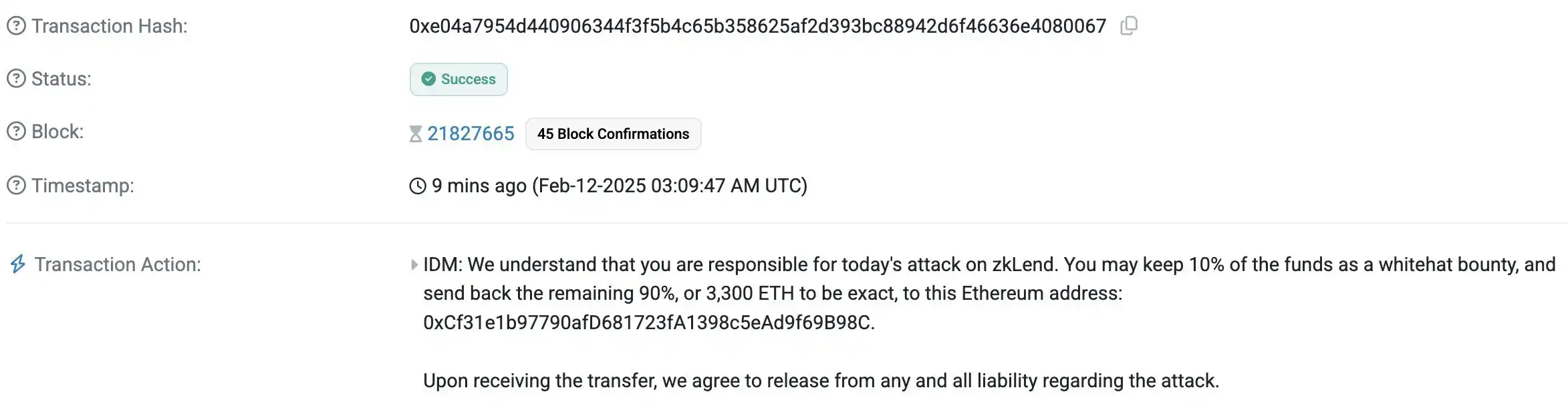
After the incident, zkLend suspended withdrawal services to safeguard the remaining funds and posted a message to the community stating that the team is actively working with multiple partners to track the hacker's identity and fund flow, promising transparency, and eventually will release a detailed investigation analysis report. In addition, zkLend also proposed to the hacker that they could keep 10% of the funds as a white hat bounty, with the remaining 90% (3,300 ETH) being transferred back to zkLend's Ethereum address. Upon receiving the transfer, the hacker would agree to waive any and all liability related to the attack.
As of the time of writing, there has been no response from the hacker regarding this proposal. zkLend posted on social media that they have reported the incident to the Hong Kong Police, the FBI, and the Department of Homeland Security and will initiate legal proceedings.
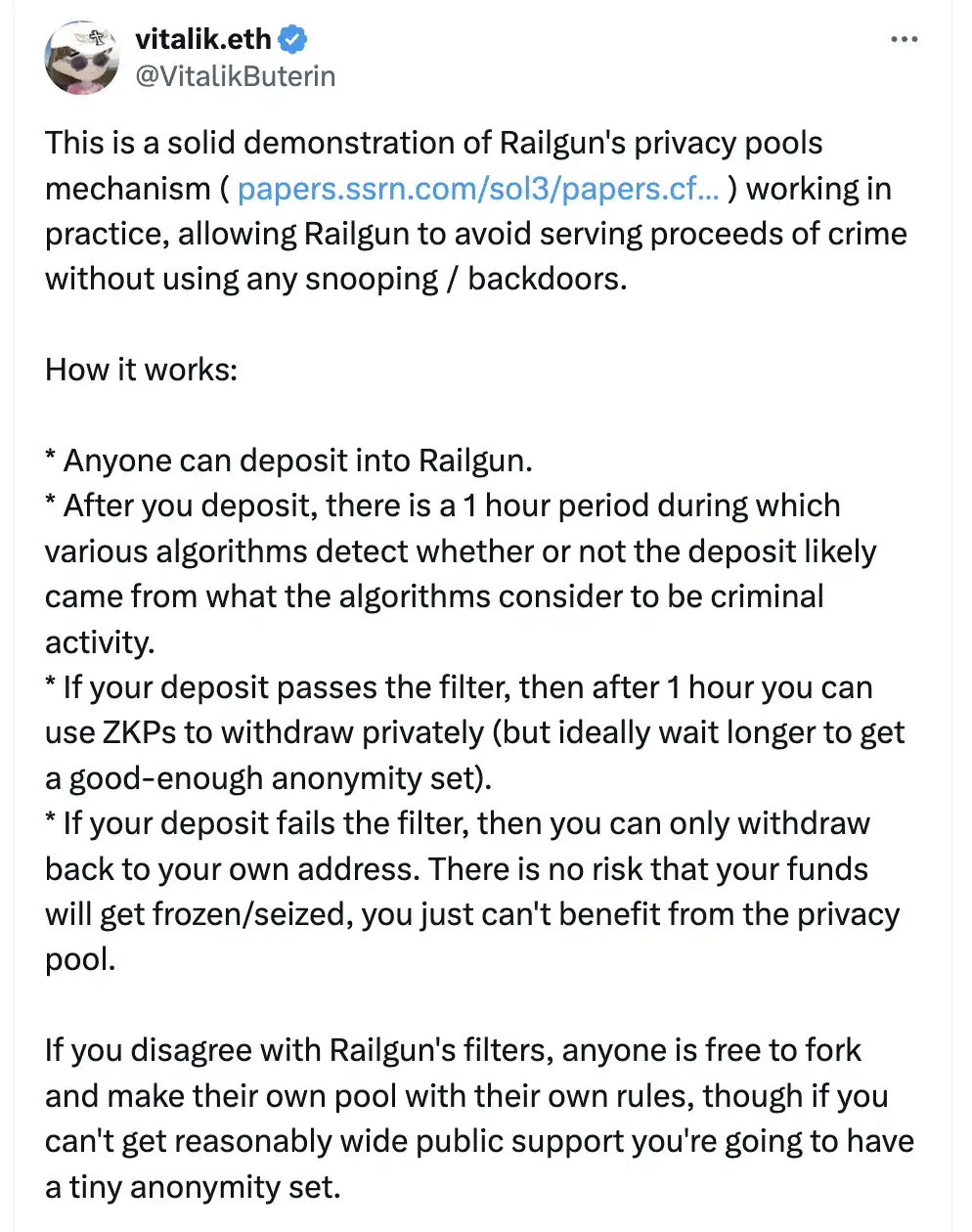
On February 13, Ethereum co-founder Vitalik, who has always supported Railgun, posted on social media, specifically explaining how Railgun successfully avoided dealing with criminal proceeds this time.
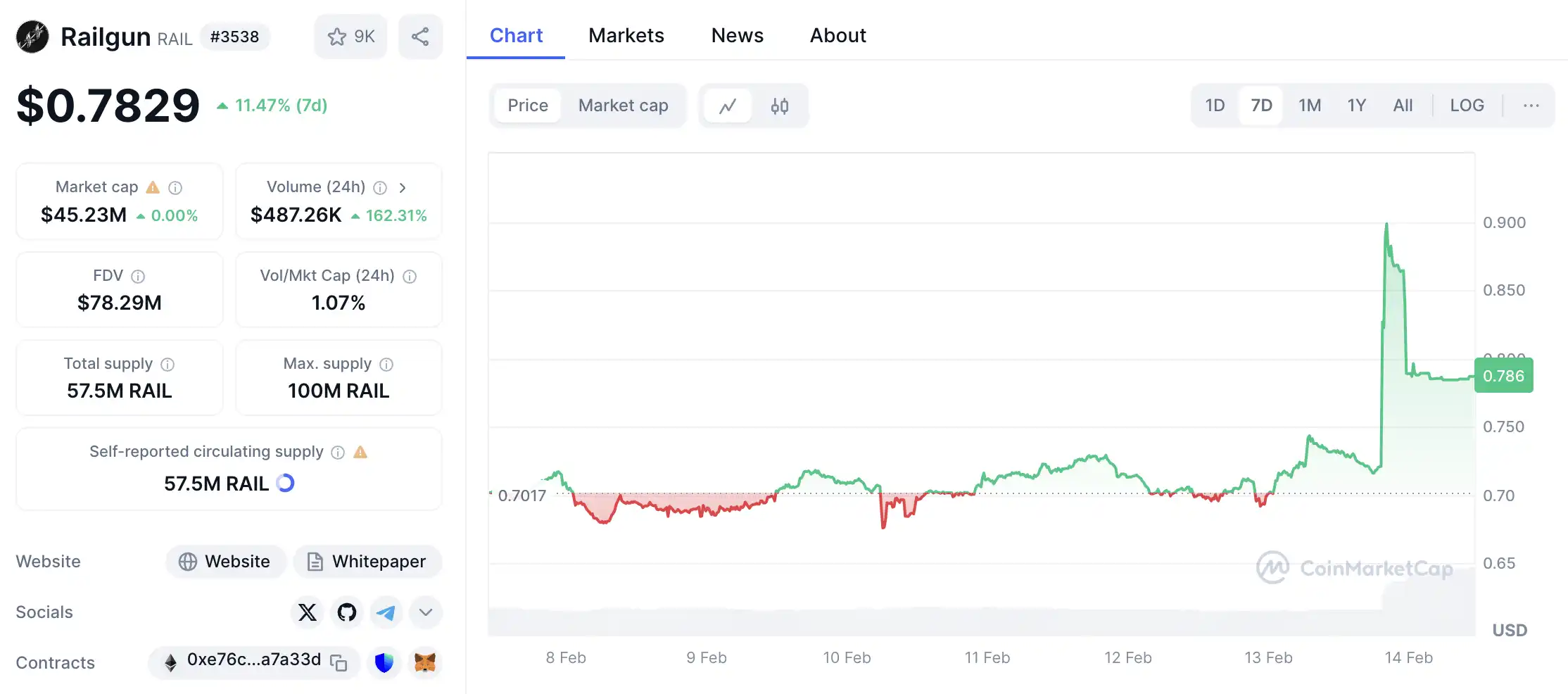
After Vitalik's post, the market's response to this news was very sensitive, and Railgun surged. According to market data, as of the time of writing, Railgun has seen a 7.00% increase in the past 24 hours, with trading volume up 162.31%.
On-Chain Anti-Money Laundering, How Does Railgun Do It?
Speaking of Railgun, this clearly anti-money laundering policy protocol, we have to mention the leading mixer service project, Tornado Cash.
Tornado Cash and Railgun both belong to the privacy track and are the first projects to provide mixer services. Its privacy protection features have made it a tool for hackers and criminals to launder money and hide funds, attracting the attention of governments and regulatory agencies worldwide, especially the U.S. Department of the Treasury's Office of Foreign Assets Control (OFAC) sanctions against it.
In August 2022, the U.S. Department of the Treasury imposed sanctions on Tornado Cash, stating that the service had facilitated money laundering of over $7 billion in the past three years and assisted the North Korean state-sponsored hacker group Lazarus Group in evading U.S. sanctions. In May 2024, one of the founders of Tornado Cash and core developer, Alexey Pertsev, was sentenced to 5 years and 4 months in prison.
Read more: "Guilty Verdict! What Does the Tornado Cash Case Judgment Mean for DeFi Regulation?"
Tornado Cash, due to its lack of anti-money laundering capabilities, became a convenient tool for hackers and money laundering criminals. The regulatory crackdown sounded an alarm for the entire privacy track. Learning from the lessons of Tornado Cash, Railgun, as a frontrunner in the privacy track, naturally had to learn from it and had a clear direction for improvement: anti-money laundering.
Railgun has adopted a more rigorous anti-money laundering strategy, focusing on enhancing compliance while maintaining privacy. The core of this strategy is to ensure that the platform can protect user privacy while effectively meeting regulatory requirements and preventing funds from being used for illicit activities. The following are the specific measures Railgun has taken:
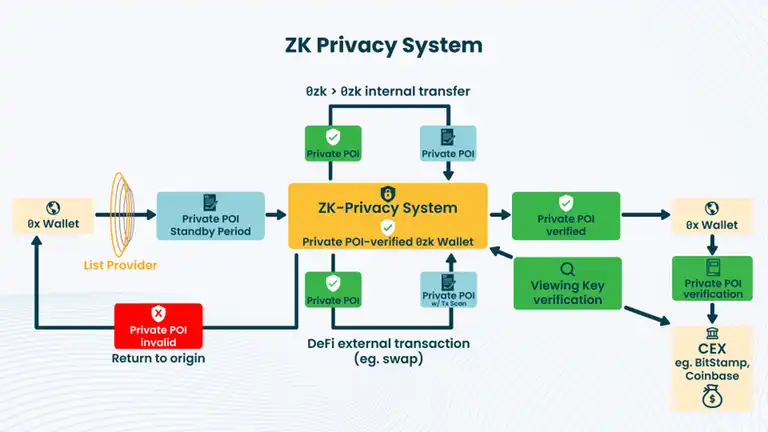
The first step, Railgun did not solely focus on optimizing the code but cleverly compiled a blacklist from regulators, compliance platforms, and other sources. The blacklist covers transaction data related to illegal activities such as money laundering, fraud, and sanctions violations, providing specific targets for precise enforcement.
The second step, after any user makes a deposit, there is a 1-hour detection period during which various algorithms analyze whether the deposit may be related to the blacklist. The entire process is fully encrypted, only outputting a conclusion of "association" or "non-association," without revealing sensitive information such as user addresses, transaction history, or balances, ensuring user privacy is technically protected.
The third step, one hour later, the user can utilize zero-knowledge proofs (ZKPs) for private withdrawals. Additionally, Railgun's internal protocol policy stipulates that if a suspicious address attempts to mix coins, the funds from that suspicious address will be forcibly returned.
Finally, Railgun proactively complies. All proofs generated by user wallets can be provided to exchanges or regulatory agencies, and these third-party entities can verify proof validity through validation algorithms without accessing user fund flows, wallet activity details, or identity data. This mechanism meets external organizations' scrutiny requirements for transaction compliance while completely avoiding the risk of user privacy leaks, achieving "trustless self-attestation."
It is precisely this combination of privacy protection, compliance mechanisms, and risk control strategies that formed the final line of defense in intercepting money laundering attackers in the zkLend incident.

The founder of Slowmist also stated, "This is a very good privacy solution."
Privacy Track, Where to Go Next?
While Railgun is building a regulatory moat, regulatory policies in the United States seem to be easing.
On November 27 last year, the U.S. Fifth Circuit Court of Appeals ruled that the U.S. Treasury Department's sanction on the Tornado Cash smart contract was illegal. For the cryptocurrency community and all who care about defending freedom, this was a historic victory. The founder of Uniswap referred to it as "an immutable smart contract beating the Treasury Department in court."
Will this ruling breed more and more calls in the privacy track for "code is law" while actually fostering criminal projects?
Related Reading: "Comprehensive Analysis of the Privacy Track: Defending Privacy or Fostering Crime, the Revolution Is Not Yet Successful"
Regardless, in the current environment of increasingly clear cryptocurrency regulations post-Trump administration, Railgun, which combines privacy and compliance, should set an example for the development of this track.
You may also like

Who's at the CFTC Table? A Rebalancing of American Fintech Discourse

AI Trading vs Human Crypto Traders: $10,000 Live Trading Battle Results in Munich, Germany (WEEX Hackathon 2026)
Discover how AI trading outperformed human traders in WEEX's live Munich showdown. Learn 3 key strategies from the battle and why AI is changing crypto trading.

Elon Musk's X Money vs. Crypto's Synthetic Dollars: Who Wins the Future of Money?
How do Synthetic Dollars work? This guide explains their strategies, benefits over traditional stablecoins like USDT, and risks every crypto trader must know.

The Israeli military is hunting a mole on Polymarket

Q4 $667M Net Loss: Coinbase Earnings Report Foreshadows Challenging 2026 for Crypto Industry?

BlackRock Buying UNI, What's the Catch?

Lost in Hong Kong

Gold Plunges Over 4%, Silver Crashes 11%, Stock Market Plummet Triggers Precious Metals Algorithmic Selling Pressure?

Coinbase and Solana make successive moves, Agent economy to become the next big narrative

Aave DAO Wins, But the Game Is Not Over
Coinbase Earnings Call, Latest Developments in Aave Tokenomics Debate, What's Trending in the Global Crypto Community Today?
ICE, the parent company of the NYSE, Goes All In: Index Futures Contracts and Sentiment Prediction Market Tool

On-Chain Options: The Crossroads of DeFi Miners and Traders

How WEEX and LALIGA Redefine Elite Performance
WEEX x LALIGA partnership: Where trading discipline meets football excellence. Discover how WEEX, official regional partner in Hong Kong & Taiwan, brings crypto and sports fans together through shared values of strategy, control, and long-term performance.

Best Crypto to Buy Now February 10 – XRP, Solana, Dogecoin
Key Takeaways XRP is set to revolutionize cross-border transactions, potentially reaching $5 by the end of Q2 with…
Kyle Samani Criticizes Hyperliquid in Explosive Post-Departure Market Commentary
Key Takeaways: Kyle Samani, former co-founder of Multicoin Capital, publicly criticizes Hyperliquid, labeling it a systemic risk. Samani’s…
Leading AI Claude Forecasts the Price of XRP, Cardano, and Ethereum by the End of 2026
Key Takeaways: XRP’s value is projected to reach $8 by 2026 due to major institutional adoption. Cardano (ADA)…
Bitcoin Price Prediction: Alarming New Research Cautions Millions in BTC at Risk of ‘Quantum Freeze’ – Are You Ready?
Key Takeaways Quantum Threat to Bitcoin: The rise of quantum computing presents a unique security challenge to Bitcoin,…
Who's at the CFTC Table? A Rebalancing of American Fintech Discourse
AI Trading vs Human Crypto Traders: $10,000 Live Trading Battle Results in Munich, Germany (WEEX Hackathon 2026)
Discover how AI trading outperformed human traders in WEEX's live Munich showdown. Learn 3 key strategies from the battle and why AI is changing crypto trading.
Elon Musk's X Money vs. Crypto's Synthetic Dollars: Who Wins the Future of Money?
How do Synthetic Dollars work? This guide explains their strategies, benefits over traditional stablecoins like USDT, and risks every crypto trader must know.


 App
App