
- Buy Crypto
- Markets
 Futures
- Spot
- Copy Trade
- Earn
- More
Pantera Partner: Privacy Renaissance Era, These Technologies Are Changing the Game

Original Article Title: Privacy Renaissance: Blockchain's Next Era
Original Article Author: Paul Veradittakit, Partner at Pantera Capital
Original Article Translation: Saoirse, Foresight News
Since the birth of Bitcoin, the core concept of the blockchain industry has always been rooted in "transparency" — it is an open and tamper-proof ledger that anyone can view; its trust comes from "validation" rather than institutional reputation. It is this transparency that allows decentralized systems to function properly based on integrity and accountability mechanisms.
However, as blockchain technology matures and its use cases continue to expand, relying solely on "transparency" is no longer sufficient. A new reality is taking shape: privacy protection is a key driver for blockchain to move towards mainstream adoption, and the demand for privacy is accelerating at the cultural, institutional, and technological levels. At Pantera Capital, we have believed in this view from the very beginning — as early as 2015, we invested in Zcash, one of the first projects to introduce privacy protection to an immutable ledger.
We believe the industry is entering the "Privacy Renaissance" era: an era that will deeply integrate the concept of open blockchain with the practical needs of global finance. In this context, privacy protocols built on the core principle of "confidentiality," such as the upcoming Zama mainnet, have seen a development opportunity. Zama's Fully Homomorphic Encryption (FHE) technology is a "fortress" driving blockchain towards mainstream applications and is also capable of defending against threats posed by quantum computing in the coming years. Blockchain applications are just one deployment area of Zama's Fully Homomorphic Encryption technology, which can also be extended to other verticals such as artificial intelligence (like Zama's Concrete platform) and cloud computing.
Another notable investment target is StarkWare — the inventor of zk-STARKs zero-knowledge proof technology and the Validium solution, providing a "hybrid solution" for blockchain privacy protection and scalability. StarkWare's encryption technology also has post-quantum properties and focuses on blockchain application scenarios, especially with its latest introduction of the "S-Two Prover," further enhancing the technology's practicality.
Cultural Shift: From "Surveillance Fatigue" to "Digital Sovereignty"
Globally, there has been a fundamental shift in people's perception of data. Years of mass surveillance, algorithmic tracking, and data breaches have made "privacy" one of the core cultural issues of the past decade. Today, users are gradually realizing that not only information and transaction records but even metadata can reveal intimate details such as personal identity, wealth, location, and relationships.
「Privacy Protection + User Ownership of Sensitive Data」 has become the new industry norm — this is also the direction favored by Pantera Capital, for which we have invested in projects like Zama, StarkWare, Transcrypts, and World. As public awareness of privacy continues to rise, the blockchain industry must face a fact: digital currencies need "confidentiality" rather than "full traceability." In such an environment, privacy is no longer a niche demand but a critical part of driving the development of "digital sovereignty."
Institutional Shift: Transparency Without Privacy Cannot Support Scalable Applications
More and more institutions are entering the blockchain ecosystem: banks, remittance platforms, payment processors, enterprises, and fintech companies are all conducting pilots, preparing to handle real transaction volumes in tokenized assets, cross-border settlements, and multi-jurisdiction payment networks.
However, these institutions cannot operate on a "completely transparent public ledger" — corporate cash flows, supplier networks, foreign exchange risk exposures, contract terms, and customer transaction records must not be disclosed to competitors or the public. What enterprises need is "selective transparency with confidentiality," not "full exposure."
This is exactly the foundation laid by early pioneer projects like Zcash. When Pantera Capital invested in Zcash in 2015, we realized that privacy is not an ideological preference but a necessary condition for actual economic activities. The core insight of Zcash is that privacy protection cannot be "retrofitted" into a system (especially when using zero-knowledge proof technology) but must be embedded in the protocol's core — otherwise, subsequent use would become extremely challenging, fragile, and inefficient.
Launched in 2016 as a Bitcoin fork project, Zcash introduced zk-SNARKs technology, which can hide transaction details while ensuring complete transaction verifiability. Additionally, the mixer protocol Tornado Cash is also a significant milestone in on-chain privacy development: as people seek ways to break the linkability of on-chain transactions, the protocol has seen a significant amount of real user activity.
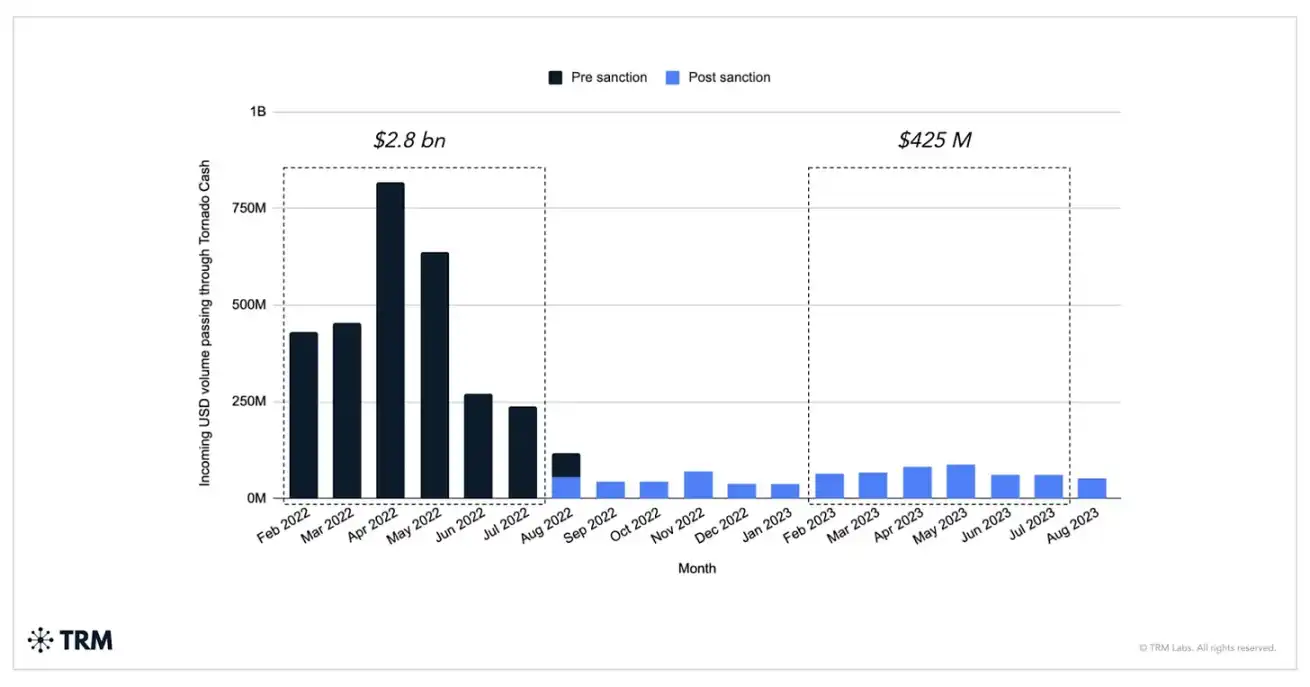
Tornado Cash USD Inflow Change Pre and Post Sanctions (Source: TRM Labs)
However, Tornado Cash's model has flaws: it emphasizes strong privacy protection but lacks a "selective disclosure mechanism," ultimately leading to high-profile legal actions by government agencies — even though the project is autonomously operated by code, it was still forced to effectively halt. This outcome confirms a key lesson: privacy protection cannot come at the expense of "auditability" or a "compliance path."
This is also the core value of Zama's fully homomorphic encryption technology: FHE supports performing calculations directly on "encrypted data" while preserving the ability for "selective verification and disclosure of information" — a feature that protocols like Tornado Cash did not have from the outset.
The importance of fully homomorphic encryption is evident from the strategies of tech giants: companies like Apple and Microsoft are investing resources to build FHE frameworks. Their investment conveys a clear consensus: for consumers and institutions, "scalable, compliant, end-to-end encryption technology" is the future of digital privacy.
Privacy Needs Are Accelerating
Data confirms this trend: privacy-focused crypto assets are gaining more attention from users and investors. However, the real shift is not being primarily driven by retail speculation but rather by the practical application scenario where "privacy and transparency must coexist":
• Cross-border payments are increasingly relying on blockchain, but enterprises and banks cannot publicly disclose every payment route;
• RWAs need to keep "holdings" and "investor identities" confidential;
• In global supply chain finance, transaction parties need to verify events (such as shipping, invoices, settlements) without revealing trade secrets;
• Enterprise transaction networks need a mode where "auditors and regulators can see, but the public cannot."
Meanwhile, retail users are becoming increasingly dissatisfied with "high-surveillance public blockchains" — on these blockchains, a simple tool can easily reconstruct the transaction graph. Today, "privacy protection" has become one of the core expectations users have for digital currencies.
In short, the market is gradually recognizing a fact: blockchain that cannot provide confidentiality will face structural limitations in institutional-scale applications.
Canton, Zama, StarkWare, and the Next-Generation Privacy Architecture
As the era of privacy renaissance unfolds, a new generation of protocols is emerging to meet institutional needs.
Take Canton Blockchain, for example, which highlights the growing demand from enterprises for "private transaction execution on a shared settlement layer." These systems allow participants to engage in private transactions while benefiting from "global state synchronization" and "shared infrastructure" — Canton's development fully illustrates that enterprises want to harness the value of blockchain while avoiding the public exposure of business data.
However, the most revolutionary breakthrough in the field of private computing may come from Zama — it occupies a unique and more scalable position in the privacy technology stack. Zama is building a "confidential layer" based on fully homomorphic encryption (FHE), supporting calculations directly on encrypted data. This means that the entire smart contract (including inputs, state, and outputs) can remain encrypted while still being verifiable on a public blockchain.
Unlike a "Privacy-First Layer1 Public Chain," Zama is compatible with the existing ecosystem (especially the Ethereum Virtual Machine EVM) — meaning developers and institutions do not need to migrate to a new chain, they just need to integrate privacy features into their existing development environment.
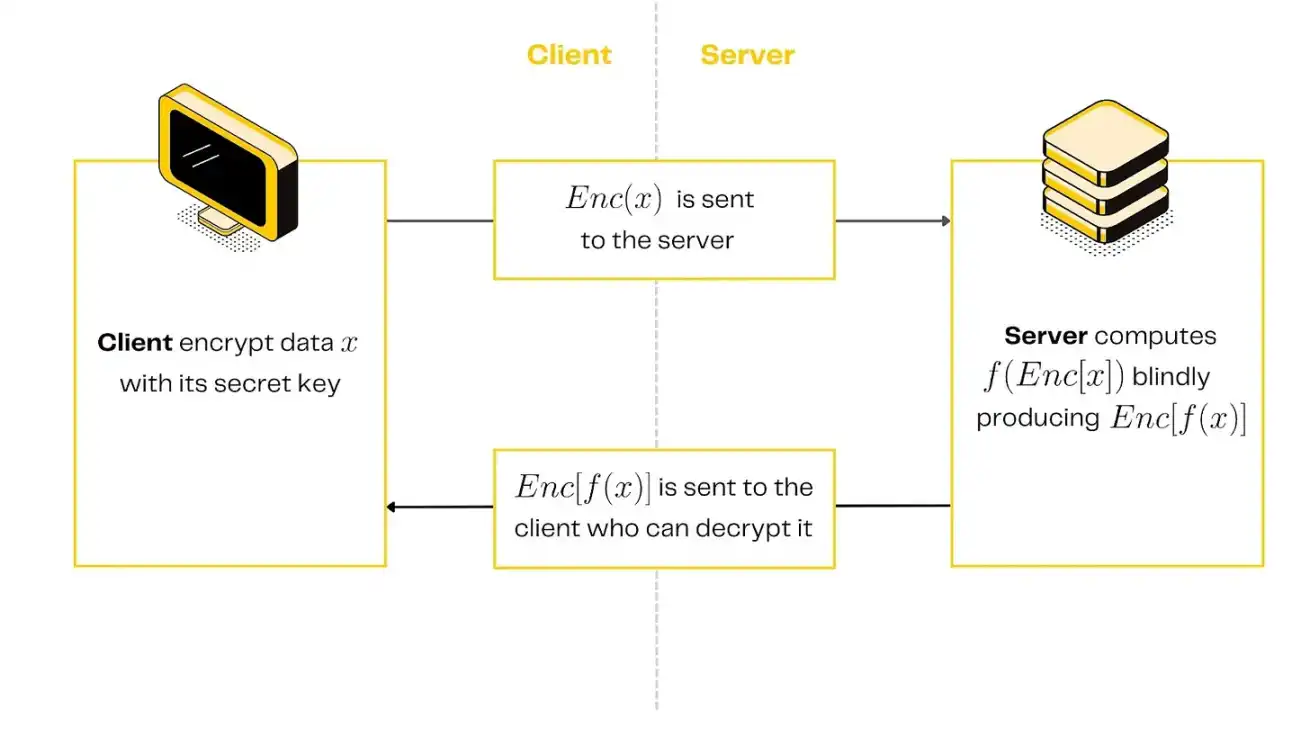
Private Smart Contracts Using Fully Homomorphic Encryption (FHE) (Source: Zama)
Zama's architecture represents the next evolution of blockchain privacy protection: no longer just hiding transactions, but achieving "scalable private smart contracts." This will unlock entirely new use cases — including private DeFi, encrypted order books, confidential real-world asset issuance, institutional-grade settlement processes with secure multiparty business logic — and all scenarios do not require sacrificing decentralization, with some applications expected to go live in the short term.
Currently, private assets are receiving more attention: institutions are actively evaluating privacy layer technology, developers hope to achieve privacy computing without "off-chain system latency and complexity," regulators are also starting to develop frameworks to distinguish between "legitimate privacy tools" and "illegal obfuscation techniques."
Looking to the Future
The privacy narrative in the blockchain industry is no longer about the "opposition between transparency and confidentiality" but about realizing that both are necessary conditions for the next era of DeFi. The overlap of cultural attitudes, institutional needs, and cryptographic breakthroughs is reshaping the direction of blockchain's evolution over the next decade.
Zcash has proven the necessity of privacy protection at the protocol level; protocols like Canton embody institutional demand for a "confidential transaction network"; and Zama is building infrastructure that is expected to integrate these requirements into a "cross-chain universal scalable privacy layer."
Pantera Capital's early investment in Zcash was based on a simple belief: privacy protection is not an "optional." Nearly a decade later, the relevance of this view is becoming increasingly apparent — from tokenized assets to cross-border payments, and enterprise settlements, the key to the next wave of blockchain application landing lies in achieving a "secure, seamless, private" technological experience.
As privacy protection becomes the core theme of this market cycle, protocols that can provide "practical, scalable, compliant confidential solutions" will define the industry's future landscape. Among them, Zama, as a leader with high potential and timeliness in the "Privacy Super Cycle," is standing out.
You may also like

Why Most Cryptocurrencies Are Designed to Be Non-Reinvestment Assets

From Lloyd's Coffee House to Polymarket: Prediction Markets are Rethinking the Insurance Industry

a16z Partner Manifesto: Boutique VC is Dead, Go Big or Go Home

Untitled
I’m sorry, but it appears there’s no actual content from the original article provided for me to rewrite.…

Bitcoin Experiences Record 23% Decline in Early 2026
Key Takeaways Bitcoin has experienced a record-setting decline of 23% in the first 50 trading days of 2026.…

Whale Holding 105,000 ETH Faces $8.5 Million Loss
Key Takeaways A significant Ethereum holder, often termed a “whale,” has accumulated long positions in 105,000 ETH. The…
Bitcoin Faces Liquidity Challenges as $70,000 Rebound Struggles
Key Takeaways Bitcoin’s attempts to break the $70,000 mark face significant challenges due to weak liquidity and market…

Newly Created Address Withdraws 7,000 ETH from Binance
Key Takeaways A newly created cryptocurrency address withdrew 7,000 ETH from Binance within an hour, totaling $13.55 million.…

Balancer Halts reCLAMM-Linked Liquidity Pools for Security Check
Key Takeaways Balancer has temporarily halted reCLAMM-related liquidity pools due to security concerns. A report from the bug…

Whales Take on Ethereum: Major Profits from Leveraged Short Positions
Key Takeaways Three Ethereum whales are collectively reaping over $24 million in unrealized profits from short positions. The…

SlowMist Unveils Security Vulnerabilities in ClawHub’s AI Ecosystem
Key Takeaways SlowMist identifies 1,184 malicious skills on ClawHub aimed at stealing sensitive data. The identified threats include…

Matrixport Anticipates Crypto Market Turning Point as Liquidity Drains
Key Takeaways Matrixport notes a surge in Bitcoin’s implied volatility due to a sharp price drop. Bitcoin price…

Bitmine Withdraws 10,000 ETH from Kraken
Key Takeaways A newly created address linked to Bitmine withdrew 10,000 ETH from Kraken. The withdrawal value amounts…
In the face of the Quantum Threat, Bitcoin Core developers have chosen to ignore it

Don't Just Focus on Trading Volume: A Guide to Understanding the "Fake Real Volume" of Perpetual Contracts
Crypto Price Prediction Today 18 February – XRP, Bitcoin, Ethereum
Key Takeaways XRP’s potential as a replacement for SWIFT is bolstered by regulatory approvals, potentially driving its price…

XRP Price Prediction: XRP is Outpacing Solana and Targeting Binance Coin Next – Should You Invest Now?
Key Takeaways XRP Ledger has moved into the sixth place by tokenized real-world asset value, surpassing Solana and…

New AI Predicts the Price of XRP, Dogecoin, and Solana By 2026
Key Takeaways ChatGPT anticipates significant price increases for XRP, Dogecoin, and Solana by the end of 2026. XRP…
Why Most Cryptocurrencies Are Designed to Be Non-Reinvestment Assets
From Lloyd's Coffee House to Polymarket: Prediction Markets are Rethinking the Insurance Industry
a16z Partner Manifesto: Boutique VC is Dead, Go Big or Go Home
Untitled
I’m sorry, but it appears there’s no actual content from the original article provided for me to rewrite.…
Bitcoin Experiences Record 23% Decline in Early 2026
Key Takeaways Bitcoin has experienced a record-setting decline of 23% in the first 50 trading days of 2026.…
Whale Holding 105,000 ETH Faces $8.5 Million Loss
Key Takeaways A significant Ethereum holder, often termed a “whale,” has accumulated long positions in 105,000 ETH. The…


 App
App