
- Buy Crypto
- Markets
 Futures
- Spot
- Copy Trade
- Earn
- More
Bitcoin = Blockchain? Why Most People Get the Relationship Wrong

When many people hear the word "blockchain," their first thought is "Bitcoin." While this connection isn't entirely wrong, it significantly narrows the scope of a revolutionary technology. To put it simply: blockchain is the technology, and Bitcoin is a product, much like the internet is the technology and Google is a product. Today, let's clarify these two often-confused concepts.
Bitcoin: Blockchain's First and Most Famous Application
In 2008, a person or group known as Satoshi Nakamoto published a paper describing a peer-to-peer electronic cash system. The following year, this system went live, and Bitcoin was born. Bitcoin was the first successful application of blockchain technology, but it is by no means the only one.
A decade after Bitcoin began operating, people realized that its underlying blockchain technology could be used independently. This is similar to the invention of the automobile; initially, the focus was on the car itself, but later, people discovered that the internal combustion engine could also power generators, ships, and more.
Defining Blockchain: A Decentralized, Immutable, and Transparent Database
In the simplest terms, a blockchain is a special kind of database. What makes it special? Three key features:
- Decentralization: Data is not stored on a single company's server but is distributed across a vast network of computers. This makes it a distributed ledger technology (DLT).
- Immutability: Once data is written to the blockchain, it cannot be altered. New information can only be added as a new "block."
- Transparency and Traceability: All transaction records are public and verifiable, though the identities of the participants remain pseudonymous.
These characteristics make blockchain technology ideal for scenarios that require a high level of trust. Consider international remittances. The traditional method involves multiple banks, with each intermediary charging fees and adding delays. With blockchain, transfers can be made directly from peer to peer, making them faster and cheaper.
Blockchain Real-World Applications: From Supply Chains to Digital Identity
Bitcoin primarily uses blockchain to record financial transactions, but the technology's potential is much greater. Current and emerging use cases include:
- Supply Chain Management: Walmart uses blockchain to track the origin of its food products, reducing the time it takes to trace a mango from the farm to the store from 7 days to just 2.2 seconds.
- Digital Identity: Microsoft is developing a blockchain-based ID system that gives users full control over their personal information.
- Copyright Protection: Several stock photo platforms use blockchain to create immutable proof of ownership, helping to combat image theft.
- Healthcare Data: Blockchain enables the secure sharing of medical records between hospitals, ensuring that data can only be accessed with patient authorization.

The financial sector is also actively exploring its potential. The Hong Kong Monetary Authority's "mBridge" project uses blockchain to facilitate direct transactions between different countries' central bank digital currencies (CBDCs), having already processed over 1,200 cross-border payments.
Clarifying the Relationship: Blockchain is the Platform, Bitcoin is an Application
A helpful analogy is to think of blockchain as a highway and Bitcoin as the very first car to drive on it. Today, that highway is filled with all kinds of vehicles:
- Public Blockchains: Open networks like Bitcoin, where anyone can participate.
- Consortium Blockchains: Semi-private networks maintained by a group of organizations, such as a settlement system between banks.
- Private Blockchains: Closed networks used within a single company for internal purposes.
There's a common pattern in technological development: the first application is rarely the most important one in the long run. The internet was initially used for sending emails; who could have imagined video streaming or mobile payments back then? The same principle applies to blockchain. Bitcoin was just the beginning.
Looking Ahead: How to Engage with Blockchain Technology
If you're interested in Bitcoin, remember that it is just one application of blockchain, its price is extremely volatile, and any investment should be approached with caution. If you want to understand blockchain technology, focus on these areas:
- Which major companies are using blockchain to solve real-world problems?
- Are there any blockchain use cases in your industry?
- What government policies or regulations are being introduced?
For example, IBM's Food Trust platform has been adopted by retailers like Carrefour. These practical applications hold more long-term value than the fluctuating price of Bitcoin.
Blockchain technology is still in its early stages, much like the internet in 1995. Back then, people thought the internet was just for email and websites. Who could have predicted smartphones and live-stream shopping? Bitcoin opened the door to the blockchain era, but the story is just getting started.
You may also like

What is Algos One AI (AIAO) Coin?
Algos One AI (AIAO) is a new addition to the crypto world, distinguished for its cutting-edge AI-powered trading…
AIAO USDT World Premiere: Algos One AI (AIAO) Coin Launches on WEEX
WEEX Exchange proudly announces the world premiere listing of Algos One AI (AIAO), an innovative AI-driven token empowering…

What Is a Hackathon? A Beginner’s Guide to Crypto Innovation Events and Why They Matter in 2026
As we hit mid-February 2026, the crypto world is buzzing with events like the AI Wars: WEEX Alpha…
What Is a Hackathon? A Beginner’s Guide to Crypto Innovation Events Like WEEX AI Wars
Hackathons have surged in popularity within the crypto space, bringing together developers, traders, and innovators to tackle real-world…
Mastering AI Crypto Trading: A Beginner’s Guide on How to Use AI for Crypto Trading
As we move through 2026, AI crypto trading is gaining momentum with events like the WEEX AI Trading…
Master AI Crypto Trading Strategies: Building High-Performing Systems for Volatile Markets
As we hit mid-February 2026, the crypto world is buzzing with advancements in AI-driven trading. The WEEX AI…

What Is AI Trading? A Beginner’s Guide to Automated Crypto Strategies in 2026
As we hit mid-February 2026, AI trading is making waves in the crypto world, especially with events like…

Is Claude AI Any Good for Creating Trading Strategies in AI Trading?
AI trading has surged in popularity lately, especially with events like the WEEX AI Trading Hackathon pushing boundaries…
Does AI Trading Actually Work? Real-World Evidence from Crypto Markets in 2026
As we hit mid-February 2026, AI trading is making waves in the crypto world, especially with events like…

Algos One AI (AIAO) Coin Price Prediction & Forecasts for February 2026 – Could It Surge Post-Launch?
As a seasoned crypto investor who’s traded through multiple bull and bear cycles, I’ve seen projects like Algos…

Is XAUt a Stable Coin? Unpacking Tether Gold’s Role in 2026 Crypto Markets
As of February 20, 2026, Tether Gold (XAUt) continues to draw attention amid rising gold prices and economic…

How Do You Store XAUT? Essential Tips for Safely Holding Tether Gold in 2026
With Tether Gold (XAUT) hitting a current price of $4,999.36 USD and a market cap of $2,603,796,088 USD…
Tether Gold (XAUT): How Much Gold Is One XAUT and What It Means for Investors in 2026
Tether Gold (XAUT) has been making waves in the crypto space, especially with Tether’s aggressive gold purchases pushing…
Is XAUT the Same as Gold? Exploring Tether Gold’s Role in 2026 Crypto Markets
As we hit mid-February 2026, Tether Gold (XAUT) continues to bridge the gap between traditional gold investments and…
Where to Buy XAUT in 2026: Top Platforms, Strategies, and Market Insights for Tether Gold
In the early months of 2026, gold-backed digital assets like Tether Gold (XAUT) have seen a surge in…

Tether Gold XAUT Price Prediction & Forecasts for February 2026: Holding Steady Near $5,000 Amid Gold Market Resilience
Tether Gold (XAUT) has been a standout in the crypto space this month, maintaining its peg to physical…
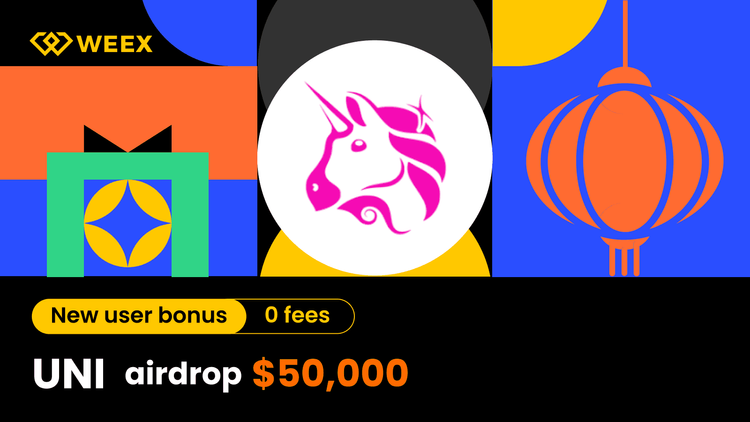
UNI Airdrop: Claim Your Share of 50,000 USDT on WEEX and Master 2026 Trading Strategies
Maximize your crypto portfolio with the WEEX UNI airdrop event. Earn a share of 50,000 USDT through tiered rewards, zero-fee trading, and strategic DeFi positioning in 2026. Join the top-tier exchange today.
WEEX Poker Party Strategy: Maximizing Score Bonuses and Rewards
Maximize rewards in the WEEX Poker Party with our guide on score bonuses and daily settlement rules. Learn how to stack multipliers and use Lucky Boosts to earn WXT.
What is Algos One AI (AIAO) Coin?
Algos One AI (AIAO) is a new addition to the crypto world, distinguished for its cutting-edge AI-powered trading…
AIAO USDT World Premiere: Algos One AI (AIAO) Coin Launches on WEEX
WEEX Exchange proudly announces the world premiere listing of Algos One AI (AIAO), an innovative AI-driven token empowering…
What Is a Hackathon? A Beginner’s Guide to Crypto Innovation Events and Why They Matter in 2026
As we hit mid-February 2026, the crypto world is buzzing with events like the AI Wars: WEEX Alpha…
What Is a Hackathon? A Beginner’s Guide to Crypto Innovation Events Like WEEX AI Wars
Hackathons have surged in popularity within the crypto space, bringing together developers, traders, and innovators to tackle real-world…
Mastering AI Crypto Trading: A Beginner’s Guide on How to Use AI for Crypto Trading
As we move through 2026, AI crypto trading is gaining momentum with events like the WEEX AI Trading…
Master AI Crypto Trading Strategies: Building High-Performing Systems for Volatile Markets
As we hit mid-February 2026, the crypto world is buzzing with advancements in AI-driven trading. The WEEX AI…


 App
App