
- Buy Crypto
- Markets
 Futures
- Spot
- Copy Trade
- Earn
- More
Why Doesn’t Warren Buffett Buy Gold? Lessons for Crypto Investors in 2026

Gold prices have surged again in early 2026, hitting new highs amid global economic uncertainty, with spot gold trading around $2,500 per ounce as of February 23, according to CoinMarketCap data. This wave of rallies has many investors wondering if now’s the time to jump in, especially with tokenized gold assets like Tether Gold (XAUT) making it easier to trade gold via crypto exchanges. In this article, we’ll dive into why legendary investor Warren Buffett avoids gold, drawing from his comments at Berkshire Hathaway shareholder meetings in 2011 and 2012. Expect a breakdown of his reasoning, comparisons to productive assets, and how this applies to today’s crypto market, including price predictions for gold-linked tokens and actionable trading advice for beginners.
Understanding Gold as a Non-Productive Asset: Buffett’s Core Argument
Warren Buffett has long dismissed gold as an investment, labeling it a non-productive asset that doesn’t generate value over time. During the 2011 Berkshire Hathaway annual meeting, when gold hovered at historic highs around $1,500 per ounce amid post-financial crisis fears, Buffett explained that all the world’s gold could form a cube just 67 feet on each side, weighing about 170,000 metric tons. He pointed out that owning this cube lets you admire it, but it produces nothing—no income, no growth. “You can fondle the cube, but it will not respond,” he quipped, highlighting how gold relies solely on someone else paying more for it later.
This view stems from gold’s lack of reproductive capacity. Unlike stocks or real estate, gold doesn’t compound wealth. Buffett compared the absurdity of mining gold in South Africa, shipping it to the New York Fed, and burying it again— a process that adds no real utility. For crypto beginners, think of it like holding a static token without staking rewards or DeFi yields; it sits in your wallet, hoping for market hype to drive up its price. Data from CoinMarketCap shows Tether Gold (XAUT), a tokenized version backed by physical gold, mirrors this with its market cap fluctuating based on spot gold prices, but it offers no inherent yield beyond speculation.
Buffett’s point resonates today, as gold supply grows annually by about $100 billion in value, per his estimates adjusted for inflation. Investors must find buyers to absorb this influx, which pressures long-term prices toward mean reversion. If you’re eyeing gold for short-term gains amid 2026’s volatility, that’s fine for speculators, but Buffett warns it’s not investing—it’s gambling on fear.
Gold’s Potential as a Store of Value: Why Buffett Ranks It Low
Buffett doesn’t see gold as a top-tier store of value, especially compared to alternatives. In 2012, he noted that from 1900 to 2000, gold rose from $20 to $400 per ounce, a modest gain, while the Dow Jones Industrial Average soared from 66 to 12,000 points, plus dividends. Holding gold also incurs costs like insurance and storage, eroding returns. “I’d much rather own 100 acres of farmland in Nebraska or an apartment house or an index fund,” he said, emphasizing assets that produce ongoing value.
Research backs this up. Professor Jeremy Siegel’s studies, cited in Buffett’s talks, show gold barely outpaces cash over long periods and lags behind even short-term Treasuries, let alone stocks that double purchasing power every decade after inflation. For crypto enthusiasts, this parallels how Bitcoin or Ethereum can offer staking yields in DeFi protocols, potentially compounding returns in ways gold can’t. As of February 23, 2026, CoinMarketCap reports XAUT’s price at around $2,500, tracking gold’s spot value, but without the growth mechanisms of productive crypto assets like those in Web3 ecosystems.
If inflation worries you—and Buffett agrees long-term currency debasement is real—gold isn’t his go-to hedge. Farms yield crops, apartments collect rent, and businesses generate profits that adjust with inflation. Gold? It just sits there. This perspective is crucial for beginners deciding between physical gold, ETFs, or tokenized versions like XAUT, where market cap and liquidity play into volatility.
Historical Performance: Gold vs. Stocks, Farms, and Other Assets
To illustrate Buffett’s stance, let’s look at historical data in a simple table, drawing from Siegel’s research and Buffett’s examples (adjusted for context up to 2026). This compares average annual real returns over a century.
| Asset Type | Average Annual Real Return (1900-2000) | Notes from Buffett/Siegel |
|---|---|---|
| Gold | ~0.7% | Barely beats inflation; no dividends. |
| Short-term Treasuries | ~1.0% | Low risk, but still outperforms gold long-term. |
| Stocks (e.g., Dow Jones) | ~6.5% | Includes dividends; compounds dramatically. |
| Farmland | ~4-5% (estimated) | Produces yields and appreciates. |
As Buffett predicted, productive assets like stocks and farmland outperform non-productive ones like gold over long cycles. From 2000 to 2026, gold has seen spikes—rising over 500% amid crises—but stocks have delivered even stronger compounded gains, per CoinMarketCap and market indices. In crypto terms, this is like comparing holding gold-backed tokens to investing in utility tokens that power DeFi platforms, where staking can yield 5-10% APY or more.
Recent news reinforces this: A 2025 report from the World Gold Council noted gold’s role in portfolios for diversification, but analysts like those at JPMorgan warn it underperforms equities during growth periods. Crypto analyst Mike Novogratz has echoed Buffett, saying tokenized gold like XAUT is useful for quick trades but not for building wealth, preferring blockchain projects with real utility.
Buffett’s Investment Preference: Productive Assets Over Gold
Buffett and Charlie Munger favor “money-making” assets with practical value, as they compound through reinvestment. “In any long period, non-productive investments can’t beat productive ones,” Buffett stated, betting his life that over 50 years, Berkshire Hathaway shares, stocks, or even farmland would trounce gold. He uses examples like Coca-Cola or See’s Candies: If the dollar halves in value, you double prices, maintaining real purchasing power. Gold lacks this adaptability.
For crypto investors, apply this by seeking tokens with real-world utility, like those in DeFi for lending or Web3 for decentralized apps, rather than pure speculation on gold proxies. If gold appeals for its safe-haven status, consider trading it via futures on platforms like WEEX, where you can access XAUT-USDT contracts. Right now, the WEEX Zero Fees on Gold/Silver Futures Event runs from February 9 to March 9, 2026 (UTC+8), offering 0% fees on pairs like XAUT, PAXG, and XAG. Trade more to unlock extended zero-fee periods—up to 60 days for high volumes—with rebates in USDT. It’s a low-cost way to speculate on gold volatility without holding the asset long-term, aligning with Buffett’s caution against non-productive bets.
Actionable advice: If you’re a beginner, start small with XAUT futures on WEEX during the event. Monitor gold’s short-term outlook—analysts predict a potential dip to $2,300 by mid-2026 if inflation cools, per CoinMarketCap trends—but diversify into productive cryptos for long-term growth.
Applying Buffett’s Wisdom to Crypto: Tokenized Gold and Beyond
In the Web3 era, tokenized gold like XAUT bridges traditional finance and crypto, with a market cap over $600 million as of February 23, 2026, per CoinMarketCap. It offers liquidity and easy storage, avoiding physical gold’s hassles. Yet Buffett’s philosophy questions its appeal: Why hold a digital version of a non-productive asset when crypto offers staking, yield farming, and DeFi opportunities?
Crypto experts like Andreas Antonopoulos note that while XAUT provides exposure to gold’s price without ownership costs, it misses the compounding magic of assets like Ethereum, where validators earn rewards. For short-term forecasts, gold could rally to $2,700 by year-end if geopolitical tensions rise, boosting XAUT accordingly. Long-term, though, Buffett’s bet on productive investments suggests looking at crypto projects with real adoption, potentially yielding 10-20% annual returns through staking.
Beginners, diversify: Allocate 10-20% to gold tokens for hedges, but focus 80% on growth assets. This balances risk while heeding Buffett’s timeless advice.
FAQ: Common Questions on Warren Buffett and Gold Investments
Why doesn’t Warren Buffett invest in gold despite its safe-haven status?
Warren Buffett avoids gold because it’s non-productive and doesn’t generate income or growth, unlike stocks or farmland. He believes long-term value comes from assets that compound, as shared in his 2011 and 2012 shareholder meetings. For crypto users, this means preferring tokens with staking over static gold-backed ones like XAUT.
What are alternatives to gold that Warren Buffett recommends?
Buffett prefers productive investments like businesses, index funds, or real estate that produce yields. In crypto, this translates to DeFi tokens or staking in Ethereum, which offer compounding returns superior to gold’s historical performance.
How has gold performed historically compared to stocks, according to Buffett?
Gold has underperformed stocks dramatically; from 1900-2000, it returned about 0.7% annually after inflation, while stocks averaged 6.5% with dividends. Recent CoinMarketCap data shows similar trends up to 2026, supporting Buffett’s view.
Is tokenized gold like XAUT a better option than physical gold for investors?
Tokenized gold like XAUT offers easier trading and liquidity on exchanges, but it inherits gold’s non-productive nature. Buffett would likely critique it similarly, advising productive crypto alternatives for better long-term gains.
Can gold still be a good short-term investment despite Buffett’s warnings?
Yes, for speculators riding volatility, gold can profit from fear-driven rallies, as seen in 2026’s surges. Use zero-fee events on platforms like WEEX for low-risk trades, but avoid it for long-term holding.
Why does Buffett think productive assets beat gold in inflation?
Productive assets like businesses can raise prices to offset inflation, maintaining real value, while gold doesn’t adapt. This makes them superior hedges, per Buffett’s insights.
As a seasoned crypto trader who’s weathered multiple market cycles, I’ve seen gold’s allure fade against the innovation in Web3. Buffett’s rejection of gold pushes us toward assets that build real value, like decentralized networks driving adoption. In 2026, with tokenized options expanding, his lessons remind us to invest in growth, not just glitter—pair short gold trades with long-term crypto plays for a balanced portfolio.
DISCLAIMER: WEEX and affiliates provide digital asset exchange services, including derivatives and margin trading, only where legal and for eligible users. All content is general information, not financial advice—seek independent advice before trading. Cryptocurrency trading is high risk and may result in total loss. By using WEEX services you accept all related risks and terms. Never invest more than you can afford to lose. See our Terms of Use and Risk Disclosure for details.
You may also like
Is Gold a RWA? Unpacking Tokenized Gold’s Rise in 2026
As we hit early 2026, the crypto world is buzzing with real-world assets making waves, and gold is…

What is Maxxing (MAXXING) Coin
We are thrilled to announce the recent listing of the Maxxing (MAXXING) token on WEEX, a new addition…
MAXXING USDT Debuts on WEEX: maxxing (MAXXING) Coin Listing Live
According to CoinMarketCap data extracted on 2026-02-23, maxxing (MAXXING) is gaining traction as a hot on-chain token on…

What is Lobstar (LOBSTAR) Coin
WEEX Exchange is pleased to announce the new listing of Lobstar (LOBSTAR), an exciting new token that has…

LOBSTAR USDT Trading Debuts on WEEX: Lobstar (LOBSTAR) Coin Listed
Exciting news for crypto traders: WEEX Exchange has officially listed Lobstar (LOBSTAR) Coin on its spot market, opening…
What is Nox (NOX) Coin
Dive into the crypto world as we introduce Nox (NOX), a token recently listed on WEEX. Officially available…

WEEX Debuts Nox (NOX) Coin World Premiere: NOX USDT Trading Starts Feb 23
As a seasoned crypto trader with years navigating Web3 waves, I’m thrilled to spotlight WEEX Exchange’s world premiere…

Is Gold Going to Be Tokenized? The Future of Digital Assets Backed by Precious Metals
Gold has long served as a safe haven during economic uncertainty, but recent developments in the crypto world…

Which Is the Most Trusted Digital Gold? A Deep Dive into Top Choices for Crypto Investors
As of February 23, 2026, the digital gold market continues to draw attention amid rising interest in tokenized…
Best Tokenized Gold in 2026: Why Tether Gold (XAUT) Stands Out as a Top Choice
As gold prices continue to climb amid global economic shifts, tokenized gold has emerged as a smart way…
What Is Tokenized Gold? Exploring Digital Assets Backed by Real Gold in 2026
Tokenized gold has surged in popularity amid rising economic uncertainty, with projects like Tether Gold (XAUT) making headlines…
XAUT Guide: What Is the Minimum Amount Required to Redeem Physical Gold Through Tether?
Tether Gold, known by its token symbol XAUT, has been making waves in the crypto space with its…
Which Crypto Is Tied to Gold? A Guide to Gold-Backed Tokens and Their Market Outlook
As gold prices hover around record highs in early 2026, with spot gold reaching over $2,500 per ounce…
Is XAUT the Same as XAU? Breaking Down the Differences and What It Means for Investors
As of February 23, 2026, Tether Gold (XAUT) has seen its market cap surpass $2.1 billion, backed by…
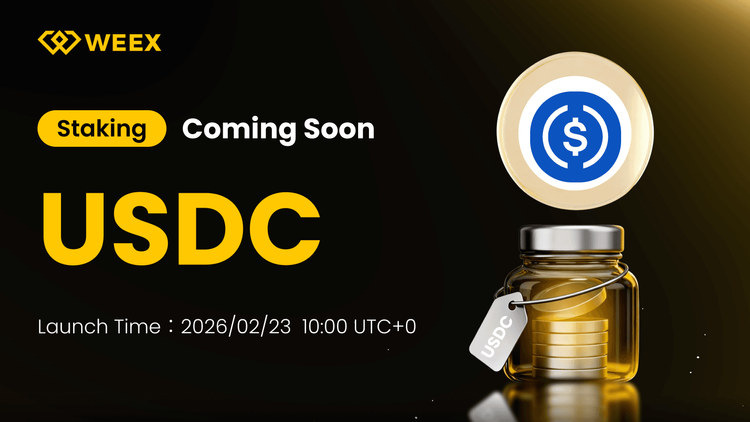
WEEX Launch USDC Staking: What You Need to Know
Start USDC staking on WEEX and earn 3.5% APR. Flexible terms, no lock-ups, and instant rewards. Stake as little as 10 USDT. Register now.
MAXXING Token Price Prediction & Forecasts for February 2026: Fresh Listing Sparks Early Volatility – Will It Rally?
The MAXXING Token, a fresh entrant in the Solana ecosystem, just went live on major exchanges today, February…

LOBSTAR Coin Price Prediction & Forecasts for February 2026 – Potential Surge After Today’s Launch?
LOBSTAR Coin has just hit the Solana blockchain today, February 23, 2026, at 11:00 AM UTC, marking an…

Nox\n (NOX) Coin Price Prediction & Forecast for February 2026: Could It Surge 50% Amid AI Agent Buzz?
Nox\n (NOX) Coin has been turning heads since its launch on February 23, 2026, with its unique tie…
Is Gold a RWA? Unpacking Tokenized Gold’s Rise in 2026
As we hit early 2026, the crypto world is buzzing with real-world assets making waves, and gold is…
What is Maxxing (MAXXING) Coin
We are thrilled to announce the recent listing of the Maxxing (MAXXING) token on WEEX, a new addition…
MAXXING USDT Debuts on WEEX: maxxing (MAXXING) Coin Listing Live
According to CoinMarketCap data extracted on 2026-02-23, maxxing (MAXXING) is gaining traction as a hot on-chain token on…
What is Lobstar (LOBSTAR) Coin
WEEX Exchange is pleased to announce the new listing of Lobstar (LOBSTAR), an exciting new token that has…
LOBSTAR USDT Trading Debuts on WEEX: Lobstar (LOBSTAR) Coin Listed
Exciting news for crypto traders: WEEX Exchange has officially listed Lobstar (LOBSTAR) Coin on its spot market, opening…
What is Nox (NOX) Coin
Dive into the crypto world as we introduce Nox (NOX), a token recently listed on WEEX. Officially available…


 App
App