
- Buy Crypto
- Markets
 Futures
- Spot
- Copy Trade
- Earn
- More
What is Meridian (MRDN) Coin? Complete Guide to AI Agent Payment Infrastructure

Meridian represents a fundamental shift in how autonomous AI agents transact with each other across blockchain networks. The project, which recently became available through the newly launched MRDN USDT trading pair on WEEX, provides universal payment infrastructure that enables AI agents to operate independently without being locked into proprietary ecosystems. Unlike traditional payment systems designed for human interactions, Meridian solves a critical infrastructure gap by implementing the x402 protocol, an open standard that allows machines to pay each other for services with instant settlement and minimal friction. For crypto investors and developers exploring the emerging AI agent economy, understanding Meridian’s role in this landscape has become essential as the sector experiences explosive growth.
Meridian Introduction: The Foundation of Machine-to-Machine Payments
Meridian is a micropayment infrastructure protocol built on the Base network that implements the HTTP 402 status code standard, creating payment rails specifically designed for autonomous AI agents. Rather than treating payments as a peripheral concern, Meridian positions itself as foundational infrastructure where transactions between machines happen seamlessly across different AI frameworks and blockchain networks. The protocol emerged from recognizing that traditional financial rails simply cannot handle the ultra-high-frequency, low-value transactions that characterize the machine economy—where AI agents might execute thousands of API calls, data purchases, or computing resource rentals per second. By leveraging blockchain’s programmable and permissionless nature, Meridian enables what would otherwise be economically impossible through conventional payment networks, making interoperability between competing AI agent architectures a reality rather than a theoretical concept.
Who Created Meridian Coin?
The Meridian project was founded by Benedict Brady, with a core founding team including Aren Rendell, Evan Kim, and Kishan Patel. These developers recognized the fundamental incompatibility between legacy payment infrastructure and the requirements of an AI agent economy. Rather than creating another proprietary system that would further fragment the ecosystem, the team designed Meridian as an open protocol layer that works across any EVM network while remaining neutral to specific blockchain implementations. This architectural philosophy reflects a deeper understanding that the value proposition for developers and users alike depends on genuine interoperability and not vendor lock-in. The project has positioned itself as part of a broader movement, collaborating with initiatives like Google’s Agent Payments Protocol (AP2) and other ecosystem participants who share the vision of creating a truly open agent economy.
How Does Meridian Crypto Work?
At its technical core, Meridian operates by reviving the HTTP 402 “Payment Required” status code that has remained dormant in internet standards since 1997. When an AI agent requests a resource and payment is required, the server responds with a 402 status code including payment instructions. The requesting agent then constructs a payment using USDC stablecoins and sends it through the Meridian contract. Rather than charging fees on transfers like traditional systems, Meridian implements a proxy contract architecture that tracks recipient balances and charges fees on withdrawals, creating an additional layer of control for organizations. This design reduces friction compared to collecting fees on every transaction while still generating protocol revenue. Settlement times operate at blockchain speed, with transactions finalizing in roughly two seconds on Base network, compared to traditional payment networks that might take days. The protocol charges a base 1% fee on payments processed through the network, though this can be reduced through staking the MRDN token.
How Is Meridian Crypto Used?
The practical applications of Meridian extend across several dimensions of the emerging AI economy. Developers integrate Meridian to enable their AI agents to autonomously purchase API access, computing resources, training data, or services from other agents without requiring human intermediation. Content creators and API providers use Meridian to monetize their services at granular levels previously impossible—users can now charge fractions of a cent for individual API calls rather than requiring expensive subscriptions. The protocol functions as a settlement layer for collaborative AI workflows where agents can hire other agents, paying for specialized services and creating complex economic chains. Educational platforms and research institutions are exploring Meridian for compensating data providers in machine learning workflows. Financial applications use Meridian for instant cross-border settlement without intermediaries. The common thread across all these use cases is enabling programmable payments at scales and speeds that human-designed systems cannot accommodate, creating new business models where value exchange becomes automatic and trust is enforced through code rather than legal agreements.
How Do You Buy Meridian (MRDN)?
Trading Meridian tokens requires accessing a cryptocurrency exchange that lists the MRDN USDT pair. The token recently became available through the MRDN USDT trading pair listed on WEEX starting October 24, 2025, providing direct trading access to a major exchange platform. To begin trading, you’ll first need to register on WEEX if you don’t already have an account, or log in on WEEX if you’re an existing user. Once your account is set up and verified, navigate to the trading section and search for the MRDN USDT trading pair. You can also access the trading interface directly by clicking to trade MRDN USDT on WEEX’s platform. The spot trading interface allows you to place market orders for immediate execution or limit orders to specify your desired entry price. Given the relatively recent launch and emerging nature of the protocol, trading volume may fluctuate—it’s worth monitoring price movement before executing larger positions.
Is Meridian (MRDN) Coin a Good Investment?
Evaluating Meridian requires understanding both the genuine opportunities and authentic risks present in this emerging sector. From a market perspective, the AI agent infrastructure category is experiencing remarkable growth, with the overall AI agents market projected to expand from $5.43 billion in 2024 to $236.03 billion by 2034, representing a compound annual growth rate of 45.82 percent. This macroeconomic tailwind creates a favorable environment for infrastructure protocols like Meridian that facilitate agent-to-agent transactions. The project benefits from being positioned in this growth narrative while also serving a specific technical need—solving the interoperability problem that affects all competing AI agent frameworks.
However, several authentic risks warrant careful consideration. Meridian launched at a peak valuation point—the token reached an all-time high of $0.275 on October 24, 2025, and subsequently declined significantly from this level. This volatility is characteristic of newly listed tokens where early speculative buying frequently precedes price corrections. The project remains relatively nascent in terms of real-world transaction volume and actual merchant adoption. While price predictions from various analysts range between $0.04 and $0.20 for near-term periods, such forecasts carry substantial uncertainty. The regulatory environment for AI agents and crypto payments remains unsettled globally, creating potential headwinds for protocol adoption. Additionally, the competition in payment infrastructure is intensifying—multiple projects including AEON, PING, and traditional payment companies are developing overlapping solutions.
For investors, the fundamental question becomes whether to view Meridian as a speculative play on AI agent adoption or as a genuine infrastructure investment. The project’s integration with established platforms and alignment with industry standards suggests substantive development rather than pure hype. However, investors should never commit capital they cannot afford to lose, particularly given cryptocurrency’s inherent volatility. The most prudent approach involves allocating only the portion of your portfolio you can afford to risk entirely, conducting independent research beyond marketing materials, and understanding that infrastructure projects typically generate value through sustained protocol usage rather than speculative trading cycles.
DISCLAIMER: WEEX and affiliates provide digital asset exchange services, including derivatives and margin trading, only where legal and for eligible users. All content is general information, not financial advice—seek independent advice before trading. Cryptocurrency trading is high-risk and may result in total loss. By using WEEX services you accept all related risks and terms. Never invest more than you can afford to lose. See our Terms of Use and Risk Disclosure for details.
You may also like
Is Gold a RWA? Unpacking Tokenized Gold’s Rise in 2026
As we hit early 2026, the crypto world is buzzing with real-world assets making waves, and gold is…

What is Maxxing (MAXXING) Coin
We are thrilled to announce the recent listing of the Maxxing (MAXXING) token on WEEX, a new addition…
MAXXING USDT Debuts on WEEX: maxxing (MAXXING) Coin Listing Live
According to CoinMarketCap data extracted on 2026-02-23, maxxing (MAXXING) is gaining traction as a hot on-chain token on…

What is Lobstar (LOBSTAR) Coin
WEEX Exchange is pleased to announce the new listing of Lobstar (LOBSTAR), an exciting new token that has…

LOBSTAR USDT Trading Debuts on WEEX: Lobstar (LOBSTAR) Coin Listed
Exciting news for crypto traders: WEEX Exchange has officially listed Lobstar (LOBSTAR) Coin on its spot market, opening…
What is Nox (NOX) Coin
Dive into the crypto world as we introduce Nox (NOX), a token recently listed on WEEX. Officially available…
WEEX Debuts Nox (NOX) Coin World Premiere: NOX USDT Trading Starts Feb 23
As a seasoned crypto trader with years navigating Web3 waves, I’m thrilled to spotlight WEEX Exchange’s world premiere…

Is Gold Going to Be Tokenized? The Future of Digital Assets Backed by Precious Metals
Gold has long served as a safe haven during economic uncertainty, but recent developments in the crypto world…

Which Is the Most Trusted Digital Gold? A Deep Dive into Top Choices for Crypto Investors
As of February 23, 2026, the digital gold market continues to draw attention amid rising interest in tokenized…
Best Tokenized Gold in 2026: Why Tether Gold (XAUT) Stands Out as a Top Choice
As gold prices continue to climb amid global economic shifts, tokenized gold has emerged as a smart way…
What Is Tokenized Gold? Exploring Digital Assets Backed by Real Gold in 2026
Tokenized gold has surged in popularity amid rising economic uncertainty, with projects like Tether Gold (XAUT) making headlines…
XAUT Guide: What Is the Minimum Amount Required to Redeem Physical Gold Through Tether?
Tether Gold, known by its token symbol XAUT, has been making waves in the crypto space with its…
Which Crypto Is Tied to Gold? A Guide to Gold-Backed Tokens and Their Market Outlook
As gold prices hover around record highs in early 2026, with spot gold reaching over $2,500 per ounce…
Is XAUT the Same as XAU? Breaking Down the Differences and What It Means for Investors
As of February 23, 2026, Tether Gold (XAUT) has seen its market cap surpass $2.1 billion, backed by…
Why Doesn’t Warren Buffett Buy Gold? Lessons for Crypto Investors in 2026
Gold prices have surged again in early 2026, hitting new highs amid global economic uncertainty, with spot gold…
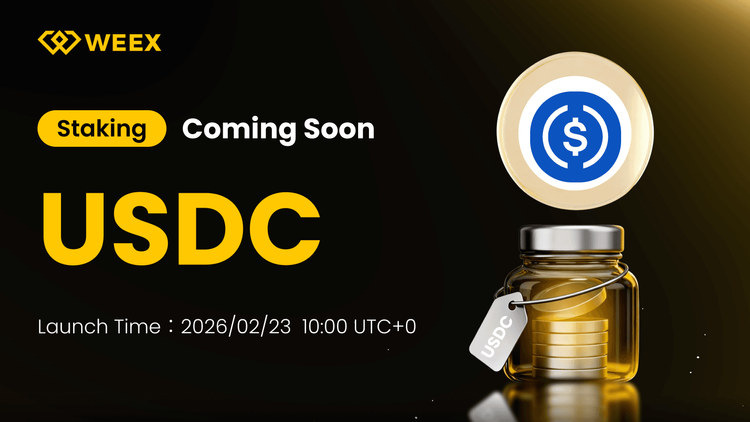
WEEX Launch USDC Staking: What You Need to Know
Start USDC staking on WEEX and earn 3.5% APR. Flexible terms, no lock-ups, and instant rewards. Stake as little as 10 USDT. Register now.

MAXXING Token Price Prediction & Forecasts for February 2026: Fresh Listing Sparks Early Volatility – Will It Rally?
The MAXXING Token, a fresh entrant in the Solana ecosystem, just went live on major exchanges today, February…

LOBSTAR Coin Price Prediction & Forecasts for February 2026 – Potential Surge After Today’s Launch?
LOBSTAR Coin has just hit the Solana blockchain today, February 23, 2026, at 11:00 AM UTC, marking an…
Is Gold a RWA? Unpacking Tokenized Gold’s Rise in 2026
As we hit early 2026, the crypto world is buzzing with real-world assets making waves, and gold is…
What is Maxxing (MAXXING) Coin
We are thrilled to announce the recent listing of the Maxxing (MAXXING) token on WEEX, a new addition…
MAXXING USDT Debuts on WEEX: maxxing (MAXXING) Coin Listing Live
According to CoinMarketCap data extracted on 2026-02-23, maxxing (MAXXING) is gaining traction as a hot on-chain token on…
What is Lobstar (LOBSTAR) Coin
WEEX Exchange is pleased to announce the new listing of Lobstar (LOBSTAR), an exciting new token that has…
LOBSTAR USDT Trading Debuts on WEEX: Lobstar (LOBSTAR) Coin Listed
Exciting news for crypto traders: WEEX Exchange has officially listed Lobstar (LOBSTAR) Coin on its spot market, opening…
What is Nox (NOX) Coin
Dive into the crypto world as we introduce Nox (NOX), a token recently listed on WEEX. Officially available…


 App
App